Testosterone Cypionate Overdose: What the Label Says and What to Do
Testosterone cypionate overdose: the label reports no acute overdoses; what a double dose does, the chronic high-dose reactions listed, and symptoms needing urgent care.
Testosterone cypionate overdose, in the sense of a single injection large enough to cause acute poisoning, is something the FDA label says has never been reported: its Overdosage section reads, in full, "There have been no reports of acute overdosage with the androgens." What does get reported is the other kind of overdose, sustained use at several times the replacement dose, and the label describes that at length under abuse.
This page separates the two, lists the situations that do need urgent care, and explains what an accidental double dose on TRT actually does.
Why Acute Overdose Is Not the Risk
Testosterone cypionate is released slowly from an oil depot in muscle with an eight-day half-life, so even a large injection does not produce the kind of spike a swallowed overdose of a short-acting drug does. The hormone itself has no acute toxicity at the concentrations an injection can reach; the limiting factor is the volume of oil, and 1 to 2 mL in a muscle is the normal dose.
That is why the label has nothing to say about acute overdosage and poison-control references treat injected testosterone as a chronic-exposure problem rather than an acute one. The injection risks that do exist, oil entering a vein (coughing, chest tightness and dizziness for minutes) and local infection, are technique problems covered in the injection guide.
An Accidental Double Dose
Injecting 200 mg instead of 100 mg, or injecting twice in a week, produces a higher peak over the next three days and a slower decline. What a man may notice is more of the usual peak effects, water retention, nipple sensitivity, oily skin, irritability or elevated mood, and a higher blood pressure reading, over the following one to two weeks.
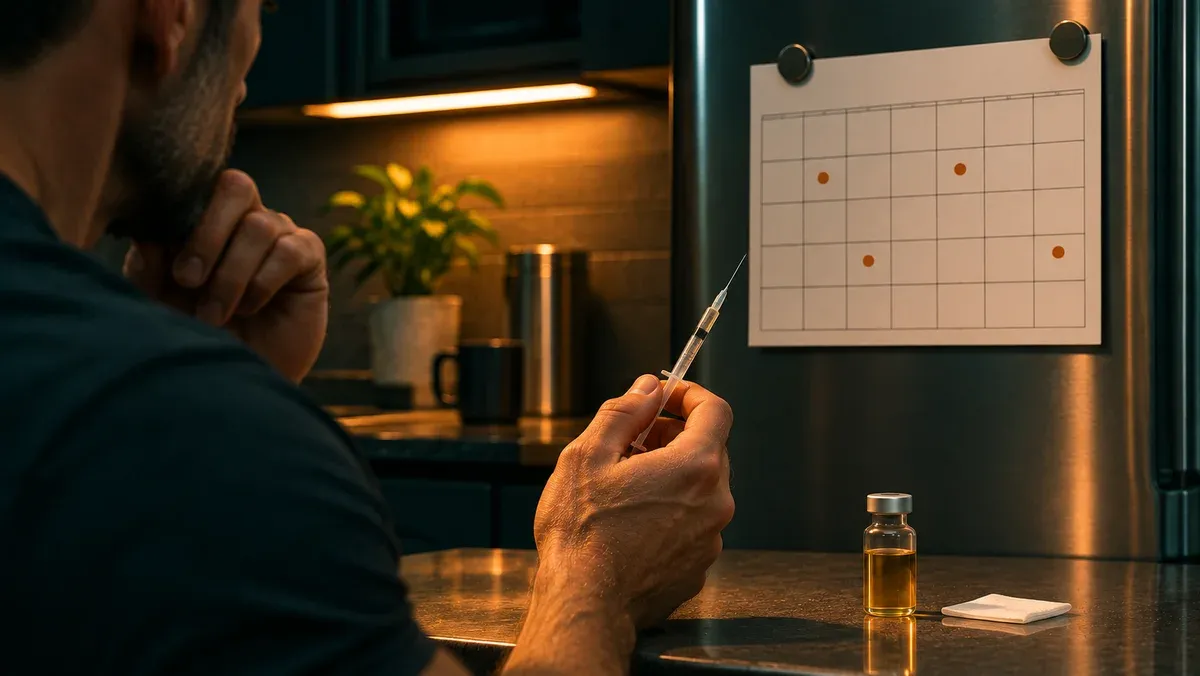
The remedy is to skip or reduce the next dose so the schedule returns to the intended weekly total, not to add anything. A hematocrit or estradiol check is only needed if the error is repeated. Men on anticoagulants or with heart failure, kidney or liver disease, whom the label singles out for edema and bleeding risk, should tell their prescriber.
Chronic High Doses: What the Label Reports
Reactions the label attributes to abuse (doses above the approved range, often with other steroids)
Cardiovascular
Cardiac arrest, myocardial infarction, hypertrophic cardiomyopathy, congestive heart failure, stroke, transient ischemic attack
Liver
Hepatotoxicity
Psychiatric
Major depression, mania, paranoia, psychosis, delusions, hallucinations, hostility, aggression, hypomania, irritability
Other
Convulsions, dyslipidemia, testicular atrophy, subfertility, infertility
Withdrawal
Depressed mood, fatigue, craving, restlessness, insomnia, decreased libido, hypogonadotropic hypogonadism, lasting weeks or months
The mechanism behind the cardiovascular list is measurable: dose-dependent rises in hematocrit and blood pressure and falls in HDL cholesterol, which the controlled dose-response trials documented up to 600 mg a week and which are set out on the bodybuilding page.
The 2017 cardiology study of long-term users found reduced heart pump function and more coronary plaque with longer use. None of this is acute, and none of it shows without blood tests and imaging until an event.
Symptoms That Need Urgent Care
Emergencies at any dose:
- 1Chest pain or pressure
- 2Sudden shortness of breath
- 3Pain and swelling in one calf, with warmth and redness (the label's clot warning)
- 4Sudden weakness or speech difficulty on one side
- 5A severe headache
- 6An erection lasting more than four hours (the label lists priapism)
Acute confusion, mania or thoughts of self-harm, which the label lists among abuse-related reactions and withdrawal symptoms, also need same-day care. For anything short of that, the US Poison Control line (1-800-222-1222) handles questions about doses and timing around the clock.
Contraindications and the People at Most Risk
Label contraindications:
- 1Breast or prostate carcinoma in men
- 2Pregnancy
- 3Serious cardiac, hepatic or renal disease
- 4Not recommended with uncontrolled hypertension
It warns that edema can be a serious complication in those with heart, kidney or liver disease, that hypercalcemia can occur in immobilized patients, that androgens increase sensitivity to oral anticoagulants, and that they can lower blood glucose and insulin requirements in diabetics.
The benzyl alcohol preservative has been linked to "gasping syndrome" in premature infants, which is why the product is not for pediatric or pregnant use. These are the groups for whom a dosing error matters more than the number of milligrams.
Frequently Asked Questions
Not acutely: the FDA label states there have been no reports of acute overdosage with androgens. The risks come from chronic high-dose use.
A higher peak over the next few days: more water retention, oily skin, mood effects and a higher blood pressure reading for a week or two. Adjust the next dose down rather than adding anything.
Skip or halve the next dose to return to the weekly total. One error does not need blood tests; repeated ones do.
At chronic high doses: acne, water retention, gynecomastia, irritability or mania, a rising hematocrit and blood pressure, and testicular shrinkage. The label lists heart attack, stroke, cardiomyopathy, liver injury and psychosis among abuse-related reports.
Chest pain, sudden breathlessness, one-sided calf swelling, stroke symptoms, a severe headache, an erection lasting over four hours, or acute confusion or mania.
The label lists increased sensitivity to oral anticoagulants, raised oxyphenbutazone levels and reduced insulin requirements in diabetics; it also alters thyroid-binding globulin without changing free thyroid hormone.
Cypionat.com is an independent educational resource. We are not affiliated with Pfizer, Azurity or any manufacturer, pharmacy or clinic. This content is for informational purposes only and does not constitute medical advice. Images on this site are illustrative artwork made for editorial purposes; they do not show real products, packaging or labels and are not an advertisement or an offer to sell.